|
ClassicGems.net |
|
|
|
|
| Chemistry
of Gems |
| |
|
|
|
|
|
There are currently 110 elements recognised by the International Union of Pure Applied Chemistry (IUPAC). These elements are displayed in the form of a matrix called the Periodic Table. The current form of the Periodic Table, including the new group numbers (1-18), was agreed to by the IUPAC in 1985. The periodic table is the most important chemistry reference available. It arranges all the known elements in an informative array. Elements are arranged left to right and top to bottom in order of increasing atomic number. Order generally coincides with increasing atomic mass. All minerals, therefore gems, are made up of elements. Some minerals have a simple chemistry with just one or two elements, such as Diamond which consists only of Carbon [C] or Quartz consisting of Silicon Dioxide [SiO2]. Others, such as Tourmaline [NaLi2.5Al6.5(BO3)3O18(OH)4] or Axinite [(Ca, Mn, Fe, Mg)3Al2BSi4O15(OH)], are very complex and may vary in chemical composition from one crystal to another. The properties of a gem are determined by and affected by its chemical composition. These properties are things like crystalline structure, crystal shape, optical properties, cleavage, hardness and color. While some of these properties are not immediately evident when looking at a gem, color is very obvious. The beautiful rose-pink to orange-red colors of a Rhodochrosite gem are due to its manganese (Mn) content. A Demantoid Garnet is colored deep green by its chromium (Cr) content. Gems from the Beryl family all have the same basic chemistry but are different colors due to the various trace elements added. Aquamarine gets its blue-green color from traces of ferrous iron (Fe). Bixbite (red Beryl) is colored red by manganese (Mn). Emerald is colored green by the addition of chromium (Cr). Heliodor is yellow from ferric iron (Fe). The pink variety of Beryl, Morganite, gets its color from slight amounts of manganese (Mn). Goshenite however, is colorless because it is pure Beryl and not colored by any impurities. |
|
|
|
The Periodic Table |
|
|
|
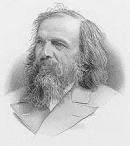
Russian chemist Dmitri Ivanovich Mendeleev (1834-1907) developed his Perodic Law and the Periodic Table in 1869 by putting the 63 elements he knew in order by atomic weight and chemical valency. Since then others have tried to improve on this method, but Mendeleev's Periodic Table has proven to be the best. The term "periodic" came from the regular occurance of certain chemical properties in the list of known elements when these are arranged in order of increasing relative mass. According to Mendeleev: "The elements, if arranged according to their atomic weights, exhibit an appartent periodicity of properties." |
|
|
|
How to read the Periodic Table Each Element is represented by a number and a letter symbol in a colored box. The top number is the Atomic Number. The one or two letters in the middle represent the Atomic Symbol. The number at the bottom is the Atomic Weight. The color in the box indicates the type of element: metals, metaloids, non-metals, gases, etc. The color of the Atomic Symbol letters indicates the physical state of the element. |
||||||||
|
|
25 |
-
Atomic
Number |
(hold your cursor over the atomic symbol for more information or click on the atomic symbol for a new window with more detailed information) |
|||||
|
Atomic
Number Atomic
Symbol Atomic
Weight The concept of atomic weight is fundamental to chemistry, because most chemical reactions take place in accordance with simple numerical relationships among atoms. Since it is almost always impossible to count the atoms involved directly, chemists measure reactants and products by weighing them and reach their conclusions through calculations involving atomic weights. Periods
and Groups Each column is referred to as a Group. There are 18 Groups. In each Group the elements of that group tend to have the same number electrons in their outer most shell, (valence shell). Elements in Group 17, such as fluorine (F), chlorine (Cl) and bromine (Br), have seven valence electrons, elements in Group 13 have three valence electrons and so on. State
of the Element |
||||||||
|
|
Solid |
Liquid |
Gas |
Synthetic |
||||
|
|
(black letters) |
(blue letters) |
(red letters) |
(fuchsia letters) |
||||
| Types
of Elements |
||||||||
|
|
|
Alkali Metals |
|
Metaloids |
||||
|
|
|
Alkaline Earth Metals |
|
Non-Metals |
||||
|
|
|
Transition Metals |
|
Halogens (non-metals) |
||||
|
|
|
Other metals |
|
Nobel (inert) Gases (non-metals) |
||||
|
|
|
Lanthanides - Rare Earth Metals |
|
Elements currently under review by the IUPAC |
||||
|
|
|
Actinides - Rare Earth Metals |
|
Elements not recognised by the IUPAC |
||||
|
Summary
More
information The source for detailed information pages that we link to is from the University of California, the US Department of Energy and the Los Alamos National Laboratory and is copyrighted by the Chemistry Operations at the University of California and the Los Alamos National Laboratory Chemistry Division. |
||||||||
|
Periodic Table of the Elements Hold your cursor over an atomic symbol for more information or click on the atomic symbol for a new window to open with more detailed information. |
|||||||||||||||||||||||||||||||||||||||||||||||||||||||||||||||||||||||||||||||||||||||||||||||||||||||||||||||||||||||||||||||||||||||||||||||||||||||||||||||||||||||||||||||||||||||||||||||||||||||||||||||||||||||||
|
|||||||||||||||||||||||||||||||||||||||||||||||||||||||||||||||||||||||||||||||||||||||||||||||||||||||||||||||||||||||||||||||||||||||||||||||||||||||||||||||||||||||||||||||||||||||||||||||||||||||||||||||||||||||||
|
|
|||||||||||||||||||||||||||||||||||||||||||||||||||||||||||||||||||||||||||||||||||||||||||||||||||||||||||||||||||||||||||||||||||||||||||||||||||||||||||||||||||||||||||||||||||||||||||||||||||||||||||||||||||||||||
|
|
|||||||||||||||||||||||||||||||||||||||||||||||||||||||||||||||||||||||||||||||||||||||||||||||||||||||||||||||||||||||||||||||||||||||||||||||||||||||||||||||||||||||||||||||||||||||||||||||||||||||||||||||||||||||||
|
"Refrain
from illusions, insist on work
and not on words. |
|||||||||||||||||||||||||||||||||||||||||||||||||||||||||||||||||||||||||||||||||||||||||||||||||||||||||||||||||||||||||||||||||||||||||||||||||||||||||||||||||||||||||||||||||||||||||||||||||||||||||||||||||||||||||
