|
ClassicGems.net |
|
|
 |
|
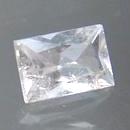
Albite (variety of Feldspar) |
|
|
Discovered in 1815; IMA status: Valid (pre-IMA; Grandfathered) |
|||
|
|
|
Chemistry |
|
|
|
|
|
Na[AlSi3O8] |
|
|
|
Sodium Aluminum Silicate |
|
Molecular Weight: |
263.02 gm |
|
Composition: |
Sodium |
8.30 % |
Na |
11.19 % |
Na2O |
|
|
Calcium |
0.76 % |
Ca |
1.07 % |
CaO |
|
|
Aluminum |
10.77 % |
Al |
20.35 % |
Al2O3 |
|
|
Silicon |
31.50 % |
Si |
67.39 % |
SiO2 |
|
|
Oxygen |
48.66 % |
O |
|
|
|
|
|
100.00 % |
|
100.00 % |
= TOTAL OXIDE |
|
|
|
||||
|
Classification |
|
|
|
|
|
Silicates (Germanates) |
|
|
8/J.07-20 |
|
|
|
9 : SILICATES (Germanates)
|
|
Related to: |
Feldspar Group. Plagioclase Series. Na-rich end member of the Albite - Anorthite Series. Anorthoclase - Anorthite - Banalcite Series. Low- and high-temperature structural modifications are recognized. |
|
Members of Group: |
Feldspar Group: Albite, Amazonite, Andesine, Anorthite, Anorthoclase, Banalsite, Buddingtonite, Bytownite, Celsian, Dmisteinbergite, Hyalophane, Labradorite, Microcline, Oligoclase, Orthoclase, Paracelsian, Reedmergnerite, Sanidine, Slawsonite, Stronalsite, Svyatoslavite |
|
Varieties: |
Albite Moonstone, Andesine, Cleavelandite, High Albite, Lazur-Feldspath, Low Albite, Oligoclase, Oligoclase-Albite, Pericline, Peristerite |
|
Synonyms: |
Acid Plagioclase, Analbite (of Alling), Cryptoclase, Cryptose, Hyposclerite, Kieselspath, Natro-Feldspat, Olafite, Sodaclase, Soda Feldspar, Tetartine, White Feldspar, White Schorl, Zygadite |
|
|
|
|
Crystal Data |
|
|
|
|
|
Crystals commonly tabular || {010}, may be curved, to 3 cm; divergent aggregates, granular, cleavable, massive. |
|
|
Common around [010] or {010}, giving polysynthetic striae on {001} or {010}; many other laws, contact, simple and multiple. |
|
|
|
|
|
Physical Properties |
|
|
|
|
|
[001] Perfect, [010] Very Good, {110} Imperfect |
|
|
Irregular/Uneven, Conchoidal |
|
|
Brittle |
|
|
6.0 - 6.5 |
|
|
2.6 - 2.65 (g/cm3) |
|
|
Fluorescent; cherry red under SW UV, white under LW UV |
|
|
Not Radioactive |
|
|
|
|
|
Optical Properties |
|
|
|
|
|
Colorless, white to gray, bluish, greenish, reddish; may be chatoyant |
|
|
Transparent to translucent |
|
|
Vitreous; pearly on cleavages |
|
|
1.528 - 1.542 Biaxial ( + ) (low); Biaxial ( - ) (high) |
|
|
0.0090 - 0.0100 |
|
|
Weak; r < v |
|
|
None |
|
|
|
|
|
Occurances |
|
|
|
|
|
Geological Setting: |
A major constituent of granites and granite pegmatites, alkalic diorites, basalts, and in hydrothermal and alpine veins. A product of potassium metasomatism and in low-temperature and low-pressure metamorphic facies and in some schists. Detrital and authigenic in sedimentary rocks. |
|
Common Associations: |
Biotite, Hornblende, Orthoclase, Muscovite, Quartz |
|
Common Impurities: |
Ca, K, Mg |
|
Type Locality: |
Finnbo (Finbo), Falun, Dalarna, Sweden |
|
Year Discovered: |
1815 |
|
View mineral photos: |
|
|
|
|
|
More Information |
|
|
|
|
|
|
|
|
|
|
|
Albite is a rare member of the Plagioclase Feldspars of the Feldspar Group of minerals that includes Albite, Amazonite, Andesine, Anorthite, Bytownite, Hyalophane, Labradorite, Moonstone, Oligoclase, Orthoclase, Sanidine and Sunstone. The Plagioclase Feldspars form a series between Albite and Anorthite. Albite is the sodium-rich end member while Anorthite is the calcium-rich end member and Oligoclase is the intermediate member. Albite is also an end member of the alkali or K-Feldspars. A variety of Albite called Cleavelandite is rarely found as white inclusions in Quartz. Albite is considered a fluorescent mineral because it fluoresces cherry red under SW UV light and white under LW UV light. Albite was named in 1815 by Johan Gottlieb Gahn and Jöns Jacob Berzelius from the Latin word albus, meaning white, in allusion to its typical color. Albus is also the root for the word albino. Sources of Albite are: Minas Gerais, Southeast Region, Brazil; Bancroft District, Hastings County, Ontario, Canada; Wicklow Township, Hastings County, Ontario, Canada; Poudrette quarry, Mont Saint-Hilaire, Rouville County, Québec, Canada; Skardu Road, Skardu District, Baltistan, Northern Areas, Pakistan; Hawk Mine, Hawk-Bakersville, Spruce Pine District, Mitchell County, North Carolina, USA. |
|
|
Albite gems for sale: We have not photographed our Albite gems yet. Please check back soon. |
