|
ClassicGems.net |
|
|
 |
|
Labradorite (a variety of Anorthite) |
|
Discovered in 1780; IMA status: Not Valid (variety name) |
|
|
|
Chemistry |
|
|
|
|
|
(Ca,Na)Al(Al,Si)Si2O8 |
|
|
|
Calcium Sodium Aluminum Silicate |
|
Molecular Weight: |
271.81 gm |
|
Composition: |
Sodium |
3.38 % |
Na |
4.56 % |
Na2O |
|
|
Calcium |
8.85 % |
Ca |
12.38 % |
CaO |
|
|
Aluminum |
15.88 % |
Al |
30.01 % |
Al2O3 |
|
|
Silicon |
24.80 % |
Si |
53.05 % |
SiO2 |
|
|
Oxygen |
47.09 % |
O |
|
|
|
|
|
100.00 % |
|
100.00 % |
= TOTAL OXIDE |
|
|
|
||||
|
Classification |
|
|
|
|
|
Silicates (Germanates) |
|
|
8/J.07-50 |
|
|
|
9 : SILICATES (Germanates)
|
|
Related to: |
Feldspar Group. A variety of Anorthite. Plagioclase series. An intermediate member of the Albite-Anorthite Series. High- and low-temperature structural varieties are recognized. |
|
Members of Group: |
Feldspar Group: Albite, Amazonite, Andesine, Anorthite, Anorthoclase, Banalsite, Buddingtonite, Bytownite, Celsian, Dmisteinbergite, Hyalophane, Labradorite, Microcline, Oligoclase, Orthoclase, Paracelsian, Reedmergnerite, Sanidine, Slawsonite, Stronalsite, Svyatoslavite |
|
Varieties: |
Lynx Eye |
|
Synonyms: |
Black Moonstone, Carnatite, Labrador Feldspar, Labrador Moonstone, Mauilite, Opaline Feldspar, Radauite, Silicite, Spectrolite |
|
|
|
|
Crystal Data |
|
|
|
|
|
Crystals typically thin, tabular along [010], and rhombic in section, to 4 cm. Cleavable, granular, or massive. |
|
|
Common according to Albite, Pericline, Carlsbad, Baveno, or Manebach laws |
|
|
|
|
|
Physical Properties |
|
|
|
|
|
Perfect on {001}, less perfect on {010}, intersecting at 90º; distinct on {110} |
|
|
Irregular/uneven to conchoidal |
|
|
Brittle |
|
|
6.0 - 6.5; |
|
|
2.68 - 2.72 (g/cm3) |
|
|
None |
|
|
Not Radioactive |
|
|
|
|
|
Optical Properties |
|
|
|
|
|
Gray, brown, greenish, blue, yellow, colorless; commonly exhibits iridescence, especially on {010}; colorless in thin section. |
|
|
Translucent to transparent |
|
|
Vitreous; pearly on cleavages |
|
|
1.554 - 1.573 Biaxial ( + ) |
|
|
0.008 - 0.010 |
|
|
None to weak; r > v |
|
|
n/a |
|
|
|
|
|
Occurances |
|
|
|
|
|
Geological Setting: |
In mafic igneous rocks and anorthosites. Rarer in metamorphic rocks, as amphibolites. As detrital grains in sedimentary rocks. |
|
Common Associations: |
Olivine, Pyroxenes, Amphiboles, Magnetite |
|
Common Impurities: |
n/a |
|
Type Locality: |
Ford Harbour, Paul Island, near Nain, off the east coast of Labrador, Canada |
|
Year Discovered: |
1780 |
|
View mineral photos: |
|
|
|
|
|
More Information |
|
|
|
|
|
|
|
|
|
|
|
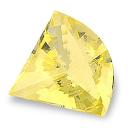
Labradorite is a variety of Anorthite which is a member of the plagioclase Feldspars of the Feldspar Group of minerals that includes Albite, Amazonite, Andesine, Anorthite, Bytownite, Hyalophane, Labradorite, Moonstone, Oligoclase, Orthoclase, Sanidine and Sunstone. Although Labradorite is considered a variety of Anorthite, it is actually a mixture of Albite and Anorthite often with a small percentage of Orthoclase. It is an intermediate member of the Albite-Anorthite Series. Chemical analysis shows that Labradorite always has an Anorithe content of 44 to 61 percent, which in mineralogy is referred to as the ”Bøggild Range”. Within the material, the twinned Anorithe and Albite crystals are aligned in parallel lamellae of varying thickness, usually according to the albite law. Labradorite is a member of the Plagioclase Feldspars of the Feldspar Group of minerals that also includes Albite, Amazonite, Andesine, Anorthite, Bytownite, Hyalophane, Labradorite, Moonstone, Oligoclase, Orthoclase, Sanidine and Sunstone. Labradorite may be best known for the opaque variety with a color play of iridescent colors that includes blues, greens, gold, orange, yellow and purple. The transparent variety ranges in color from colorless to yellow. It occassionally has inclusions of small to microscopic particles of colloidal copper which creates the effect of schiller. Schiller is the reflection of light off the copper particles suspended in the gem. This type of Labradorite with schiller is called Sunstone. Labradorite was named in 1780 by German geologist Abraham Gottlob Werner (1749-1817) for the location of its discovery in 1770 at Ford Harbour, Paul Island, Labrador, Canada. Labradorite distribution: widespread. From Ford Harbour, Pauls Island, Labrador, Newfoundland; at Lake St. John, Quebec; and elsewhere in Canada. In the USA, especially in northern New York, forming the Adirondack Mountains; crystals from Sagebrush Flat, about 37 km north of Plush, Lake County, Oregon; atop the San Marcos Mountains, San Diego County, and in the western San Gabriel Mountains, Los Angeles County, California. Abundant gem crystals in the Pinacate volcanic field, Sonora, Mexico. At Vesuvius, Campania, and on Mt. Etna, Sicily, Italy. From Ylämaa, near Lappeenranta, Finland. In the Langesundsfjord- Larvik-Tvedalen area, Norway. On Surtsey Island, south of Iceland. |
|
|
Labradorite gems for sale: We have not photographed our Labradorite gems yet. Please check back soon. |
