|
|
||||||||||||||||
|
||||||||||||||||
|
||||||
|
|
|
|
Chrysoberyl
|
|
| | |
| Discovered in 1789; IMA status: Valid (pre-IMA; Grandfathered) | ||
|
| ||
|
Chemistry |
|
|
| |
|
BeAl2O4 | |
|
|
Beryllium Aluminum Oxide |
|
Molecular Weight: |
126.97 gm |
|
Composition: |
Berylium |
7.10 % |
Be |
19.70 % |
BeO |
|
|
Aluminum |
42.50 % |
Al |
80.30 % |
Al2O3 |
|
|
Oxygen |
50.40 % |
O |
|
|
|
|
|
100.00 % |
|
100.00 % |
= TOTAL OXIDE |
|
|
|
||||
|
Classification |
|
|
| |
|
Oxides | |
|
4/B.07-10 | |
|
|
4 : OXIDES (Hydroxides, V[5,6] vanadates, arsenites, antimonites, bismuthites, sulfites, selenites, tellurites, iodates)
|
|
Related to: |
The Cr-analogue of Mariinskite. |
|
Varieties: |
Alexandrite, Ceylonese Chrysolite, Chrysolite Cat's Eye, Cymophane |
|
Synonyms: |
Aluminate of Glucina, Alumoberyl, Chrysberil, Chrysoberil, Chrysopal (of Delamétherie), Crisoberilo, Krisoberil, Krysoberril, Oriental Chrysolite |
|
|
|
|
Crystal Data |
|
|
|
|
|
Crystals are tabular on {001} or short prismatic along [100], to 22 cm; prominently striated on {001} || [100]. |
|
|
Common on {130}, producing either flattened heart-shaped or pseudohexagonal multiple contact and penetration twins. |
|
|
|
|
|
Physical Properties |
|
|
|
|
|
Distinct on {110}, imperfect on {010}, poor on {001}. |
|
|
Irregular/Uneven to Conchoidal |
|
|
Brittle |
|
|
8.5 |
|
|
3.75 (g/cm3) |
|
|
Weak red in SW and LW UV |
|
|
Not Radioactive |
|
|
|
|
|
Optical Properties |
|
|
|
|
|
Various shades of green, yellow, brownish to greenish black, may be raspberry-red under incandescent light when chromian; colorless, pale shades of yellow, green, or red in transmitted light. |
|
|
Transparent to translucent, may be opaque and chatoyant with oriented inclusions. |
|
|
Vitreous |
|
|
1.746 - 1.756 Biaxial ( + ) |
|
|
0.010 |
|
|
r > v |
|
|
X = red; Y = yellow-orange; Z = emerald-green. Exhibits a bluish opalescence or chatoyancy, notably on {010}. Also asteriated with a cat's eye effect. |
|
|
|
|
|
Occurances |
|
|
|
|
|
Geological Setting: |
Characteristic of some granite pegmatites associated with high-grade mica schists or reaction zones in ultramafic rocks; also detrital in placers. |
|
Common Associations: |
Quartz, Muscovite, Albite, Beryl, Columbite, Tourmaline, Topaz, Kyanite, Staurolite (granite pegmatites); Phenakite, Apatite, Tourmaline, Fluorite (reaction zone pegmatites). |
|
Common Impurities: |
Fe, Cr, Ti |
|
Type Locality: |
Takowaja, Russia |
|
Year Discovered: |
1789 |
|
View mineral photos: | |
|
|
|
|
More Information |
|
|
|
|
|
| |
|
|
|
|
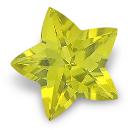
Chrysoberyl is not very well known in the gem world. It is somewhat overshadowed by one of its more famous varieties, Alexandrite. Alexandrite is the best known and most valuable variety of Chrysoberyl. The quality of Alexandrite's color change effect is what accounts for its desirability and value. It can change from shades of green or blue-green in daylight to shades of mauve, violet, purple or even red in incandescent light. Alexandrite is also available as a cat's eye gem. Occurances
of Chrysoberyl are widespread, however fine crystals
are uncommon. Notable localities include: from many
places in Brazil, with exceptional crystals from Tancredo,
Itagua¸cu, and Colatina, Espirito Santo; from Faria
Lemos, Santa Luzia de Carangola, and Americana, Teófilo
Otoni, Minas Gerais; at Campo Formoso, Teixeira de Freitas,
and Cachoeira, Bahia. From Maršíkov, Šumperk, Moravia,
Czech Republic. At the Izumrudnye mines, Tokovaya River,
near Yekaterinburg (Sverdlovsk), and Mursinka, Ural
Mountains, Russia. From Miakanjovato, near Lake Alaotra,
northeast of Ambatosoratra, Madagascar. Near Masvingo
(Ft. Victoria), Zimbabwe. Abundant in gem gravel placers
in the Ratnapura district, Sri Lanka. In the USA, from
near Golden, Jefferson County, Colorado; in Maine, at
Topsham, Sagadahoc County, from Paris, Norway, and Hartford,
Oxford County, and elsewhere. |
|
|
We
have not photographed our Chrysoberyl gems
yet. Please check back soon! |
